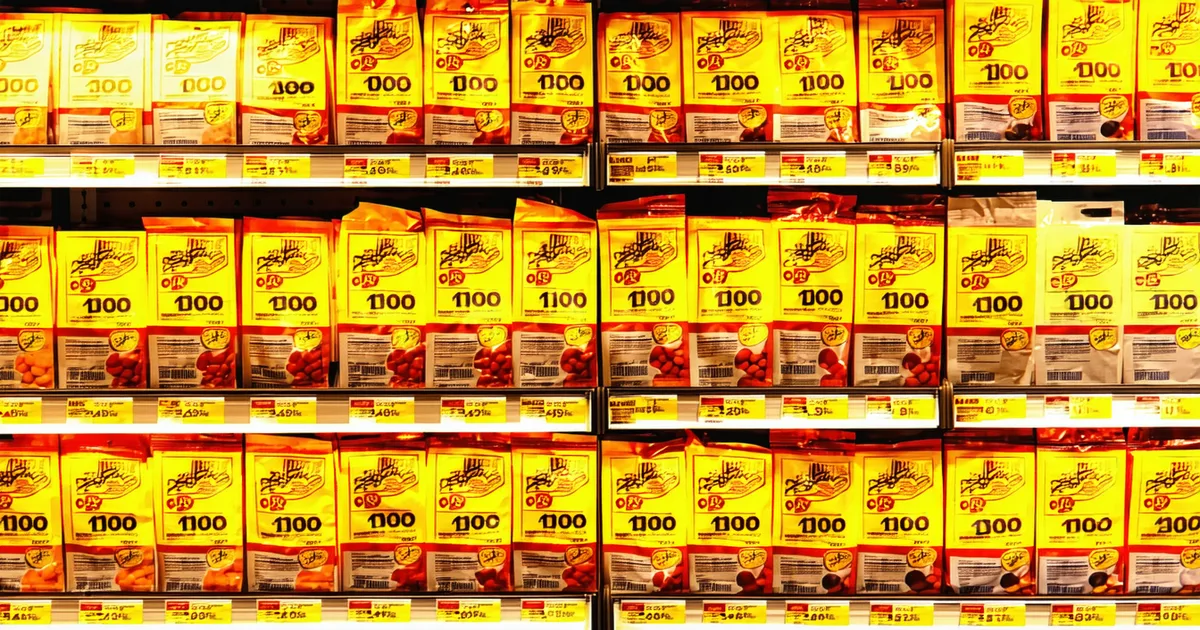
Q4 is when the shelf gets competitive in Egypt. The run-up to Christmas across the expatriate community, the preparation purchases before New Year, and — most significantly — the shadow planning that happens in Cairo buying offices for Ramadan (which begins roughly 30 days into Q1) all concentrate brand promotional and pricing activity into October through December. For category managers covering the Egyptian market, Q4 2025 was a particularly instructive period to watch.
The Currency Layer Makes Everything Harder
Before discussing SKU-level price movements, there is a context that practitioners cannot ignore: the Egyptian pound had a turbulent year through 2025 by any measure. When a currency moves significantly against the dollar — and Egypt's import-dependent FMCG categories (personal care, household products, packaged food ingredients) price in dollar-linked procurement costs — the effect on shelf prices is not linear and not synchronized across channels.
Modern trade chains tend to adjust more formally, with planogram resets and system-driven price updates. Traditional trade — the backbone of Egyptian FMCG volume — reprices store by store, owner by owner. This creates a genuine price corridor between formats: the same 250ml shampoo SKU might carry a different consumer price in a supermarket in Maadi versus a baqqâla three streets away, and the gap widens during high-inflation windows. In Q4 2025, we observed that price corridor spreading in personal care more than in any other category, partly because of input cost pressures and partly because promotionally active brands chose to defend their modern trade price while allowing distributor pricing into traditional trade to drift upward.
Which Categories Showed the Highest Volatility
Across the modern trade stores we monitored in Cairo, Alexandria, and Delta region locations, three categories stood out for pricing volatility in Q4 2025.
Cooking oils and edible fats continued to be the most volatile staple category — a pattern consistent with the prior two years. This is a category where branded and unbranded product sit alongside each other on the shelf, and consumers will switch within a visit if price differentials become too visible. Brands in this category face a structurally difficult position: holding price risks visible switching to commodity alternatives, while discounting signals a value concession. Several brands chose to compress pack sizes rather than adjust headline prices, a format change that field observers pick up but scanner-only data tends to mis-classify.
Personal care — specifically hair care and body wash — saw meaningful upward price movement at the premium end while value tiers held more stable. The pattern is consistent with a trading-down effect where middle-tier SKUs lost velocity to both the value end (consumer stretch downward) and, at the upper end, to promotionally active imports. We're not saying premium brands lost shelf share across the board — some premium SKUs held or gained positions where they were supported by end-aisle feature — but the mid-tier squeeze was real and measurable through field audits in ways that would not surface cleanly in basket data alone.
Beverages — specifically ambient juice and carbonated drinks — saw promo intensity spike sharply in weeks 44 through 49 (roughly late October to early December). This is consistent with the run-up to New Year stocking. Display-space competition was particularly visible in large hypermarket formats: end-aisle feature pricing from two competing carbonated drink brands in one Cairo-area store showed a simultaneous discount of 15% and 12% respectively — not unusual for the category globally, but the field photo record makes the depth and overlap visible in ways that weekly price scans capture only partially.
The Ramadan Forward Shadow in Q4
A dynamic that shapes Q4 Egyptian retail but gets underweighted in global category planning cycles: Egyptian consumers and trade buyers begin Ramadan preparation earlier than many brand managers account for. Buying patterns for rice, pasta, canned goods, and certain confectionery categories shift noticeably in December as households and small grocers begin light stock-building. This creates a Q4 price intelligence challenge — is a SKU gaining velocity because of normal Q4 promotional activity, or because of early Ramadan positioning? The distinction matters for how you interpret competitive price moves made in December.
For one ambient food brand category we tracked, a competitor's price reduction in week 50 looked, on the surface, like a response to another brand's promotion from week 47. A field visit to the same store cluster showed the reduced-price SKU was being placed adjacent to Ramadan staple products on a cross-category display — a merchandising decision, not a defensive pricing response. Without the physical shelf context, the price-only signal is ambiguous.
What This Means for Category Review Season
Egyptian modern trade category reviews typically run in January and February, covering the prior year's performance and setting the coming year's planogram and promotional calendar. The Q4 data — particularly the eight weeks before year-end — lands directly in that discussion.
Category managers preparing for these reviews should be cautious about relying exclusively on any single data source. POS scanner data from modern trade captures volume and revenue at the lane, but it does not tell you what was happening to your competitor's price at the same time in the same store. It does not tell you whether your SKU's velocity decline was caused by your own price point or by a competitor who happened to have an end-aisle feature you were not aware of.
Field-collected price and shelf data fills that gap, but it comes with its own limitations: coverage is selective, cadence matters (a bi-weekly field visit can miss a one-week promo), and observer consistency affects inter-store comparability. Neither data type is complete on its own. A category review built on scanner data alone misses the competitive pricing context. A category review built on field data alone lacks the volume trajectory.
A Practical Note on Data Lag
One honest challenge in Q4 Egyptian retail intelligence: the period between Eid al-Adha and mid-October often sees reduced field data collection across the market, as distributor activity slows and store resets pile up in a short window at the start of October. This means that the first three weeks of Q4 tend to have thinner field coverage than the rest of the quarter — a data gap that any practitioner working with third-party field data should factor in when interpreting early Q4 trend lines.
This is not unique to Egypt. Ramadan creates similar data-thinning effects during its month in every MENA market. The calendar awareness matters as much as the methodology when you are reading the data that comes back.
Q4 2025 in Egypt was not a stable pricing environment, and the brands that came into January category reviews with a clear, field-verified picture of what their competitive price position actually was — across both modern and traditional trade, with the promotional overlay stripped out — were better positioned than those relying solely on national-average figures from syndicated sources.
The category review season in Egypt rewards specificity. A brand manager who can say "our price index versus competitor X, across the Cairo modern trade stores we tracked, moved from 102 in October to 108 in December — here is when and where the gap opened" is having a fundamentally different category conversation than one presenting a national average. The data to support that specificity requires field presence, consistent methodology, and the discipline to capture it across the full quarter — not just in the week before the review meeting.